Design in 2026 is no longer about what looks new. It’s about what works, what connects, and what builds long-term brand value.
Brands today are moving away from decorative visuals and toward intentional design systems that communicate clearly, adapt easily, and build recognition across platforms.
Understanding where design is headed is not just useful for designers — it’s essential for brands that want to remain relevant in a fast-evolving visual landscape.
The Shift from Aesthetic Trends to Strategic Direction
For years, design conversations focused mainly on style. But in 2026, the focus has shifted from what looks good to what communicates best.
Modern brands now prioritize:
clarity over complexity
personality over perfection
systems over standalone visuals
Design is no longer treated as decoration. It is treated as communication.
The Rise of Emotion-Driven Color Systems
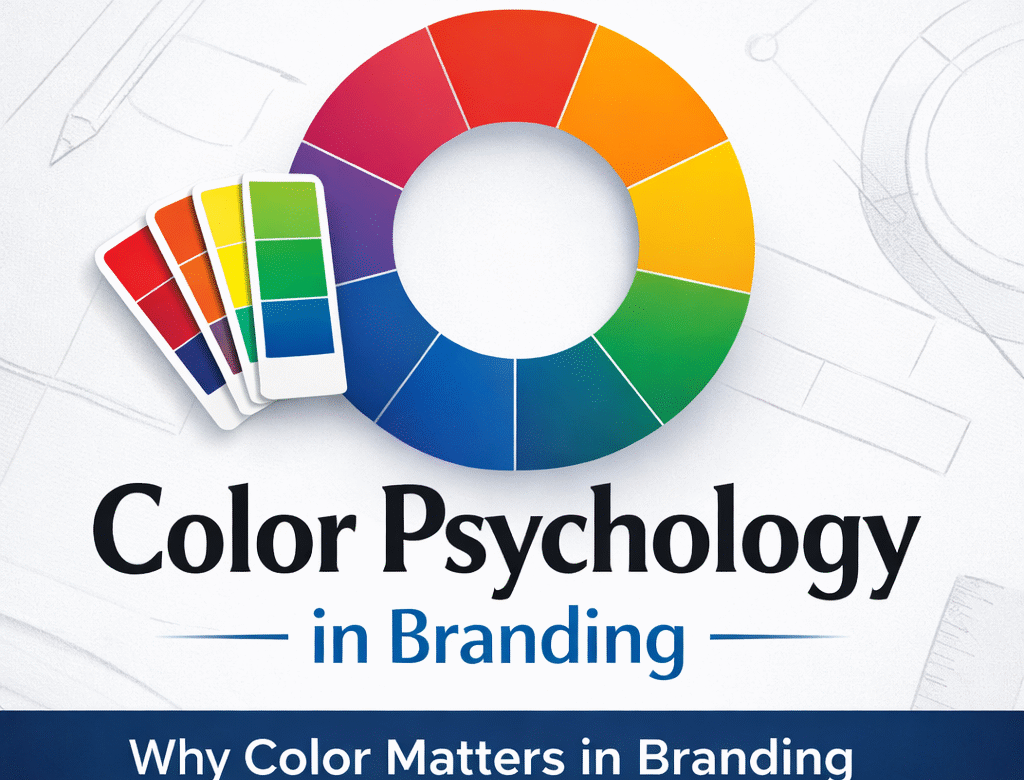
Color decisions are becoming more intentional and psychologically informed. Instead of choosing palettes based on preference, brands are selecting colors based on emotional positioning.
Key directions shaping color usage:
warm earthy tones for trust and authenticity
soft neutrals for calm and clarity
bold accents for memorability
gradients for digital-first identities
In 2026, color is strategy — not styling.
Typography as Brand Ownership
Typography is quickly becoming the strongest differentiator in brand identity. Rather than relying on widely used fonts, brands are investing in customized type, modified letterforms, and distinctive wordmarks.
This shift is happening because typography:
increases recognition
builds authority
improves readability
creates uniqueness
In many modern identities, typography alone carries the entire brand presence.
From Minimal Design to Meaningful Minimalism
Minimalism is still dominant, but its purpose has evolved. Instead of being purely aesthetic, minimal design now serves clarity and usability.
The new minimalism includes:
intentional spacing
subtle depth
refined contrast
precise alignment
It is less about removing elements and more about keeping only what matters.
Design Systems Over Single Logos
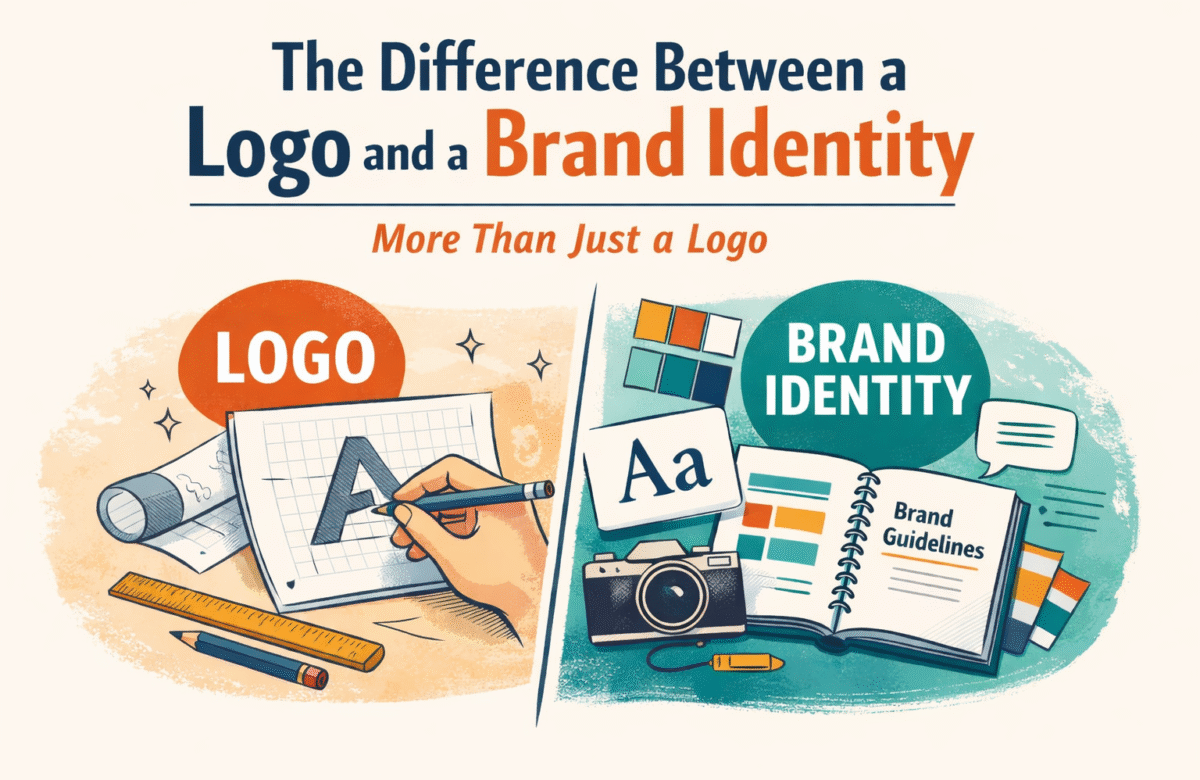
One of the biggest shifts in 2026 is the move from single logo thinking to complete identity systems.
Brands are asking for:
scalable visual systems
responsive logos
adaptable color frameworks
flexible typography sets
motion-ready assets
Designers are no longer just creating logos. They are building visual ecosystems.
What Designers Must Understand Moving Forward
To stay relevant in 2026 and beyond, designers must think beyond visuals and focus on purpose. Successful designers today justify their design decisions with clear reasoning, understand brand psychology, build scalable systems, prioritize usability, and design for multiple platforms. The role of the designer has evolved from stylist to strategist.
Why This Direction Matters for Brands
The direction design is heading reflects deeper changes in how people interact with brands.
Today’s audiences expect:
instant recognition
visual consistency
digital adaptability
authentic expression
Brands that invest in strategic design stand out faster and build trust more effectively.
In a crowded market, design clarity is competitive advantage.
What Designers Must Understand Moving Forward
To stay relevant in 2026 and beyond, designers must think beyond visuals and focus on purpose.
Successful designers today:
justify design decisions
understand brand psychology
build scalable systems
prioritize usability
design for multiple platforms
The role of the designer has evolved from stylist to strategist.
Final Perspective:
Where design is headed in 2026 isn’t defined by a single color, font, or style. It is defined by intention.
clearer
smarter
more flexible
more human
The brands that succeed will not be the ones that follow trends — but the ones that understand why those trends exist and how to use them strategically.